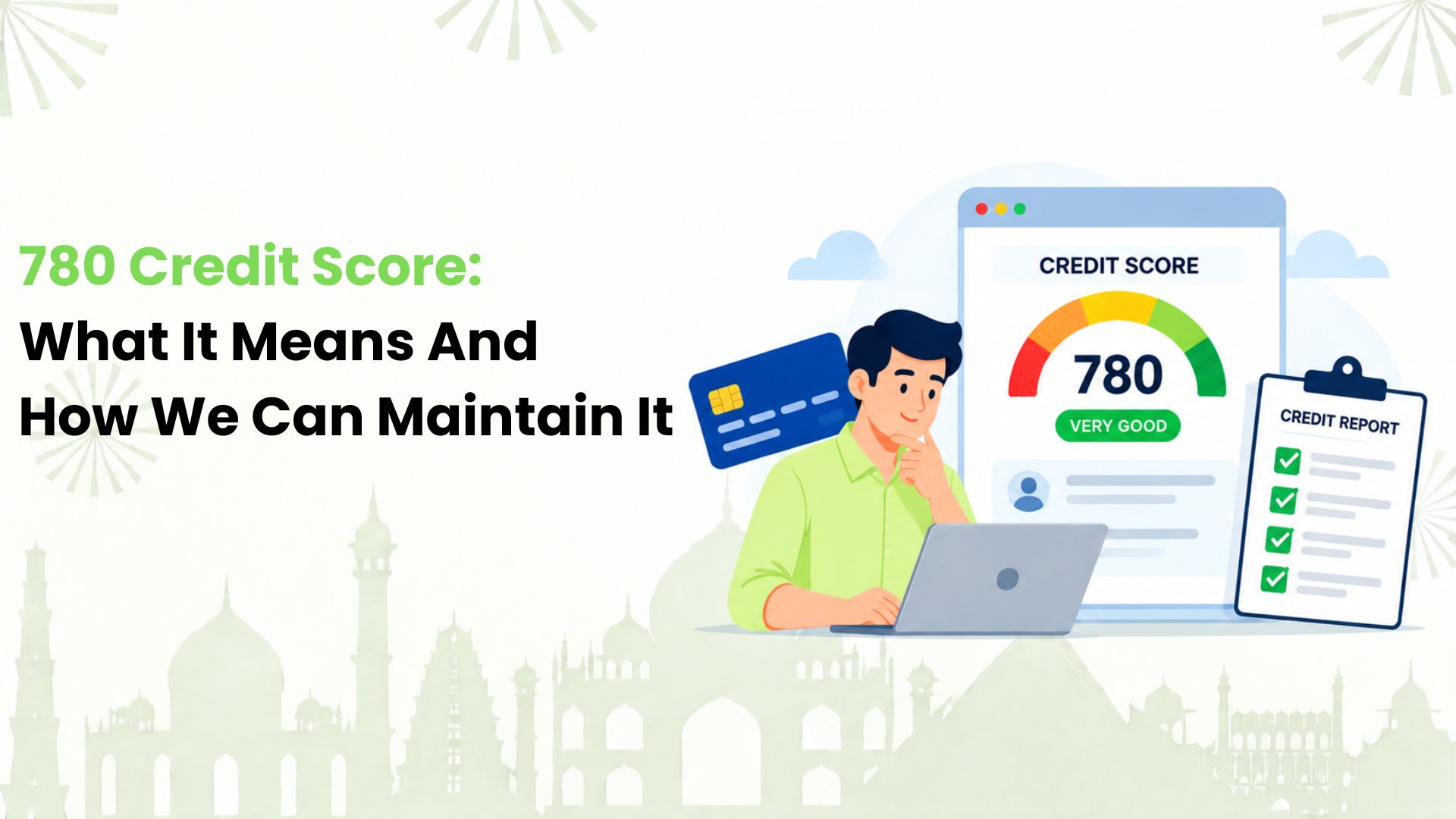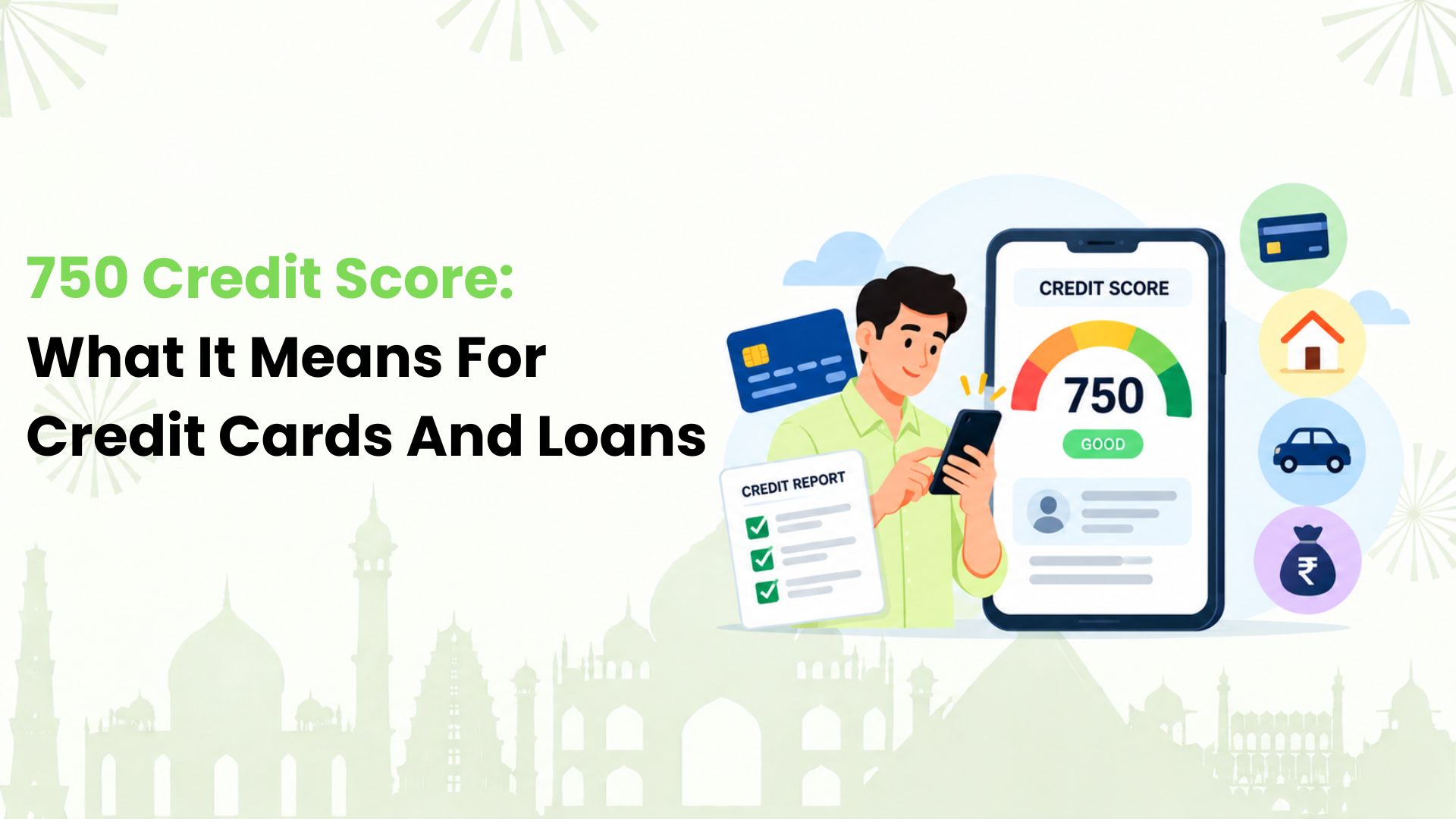
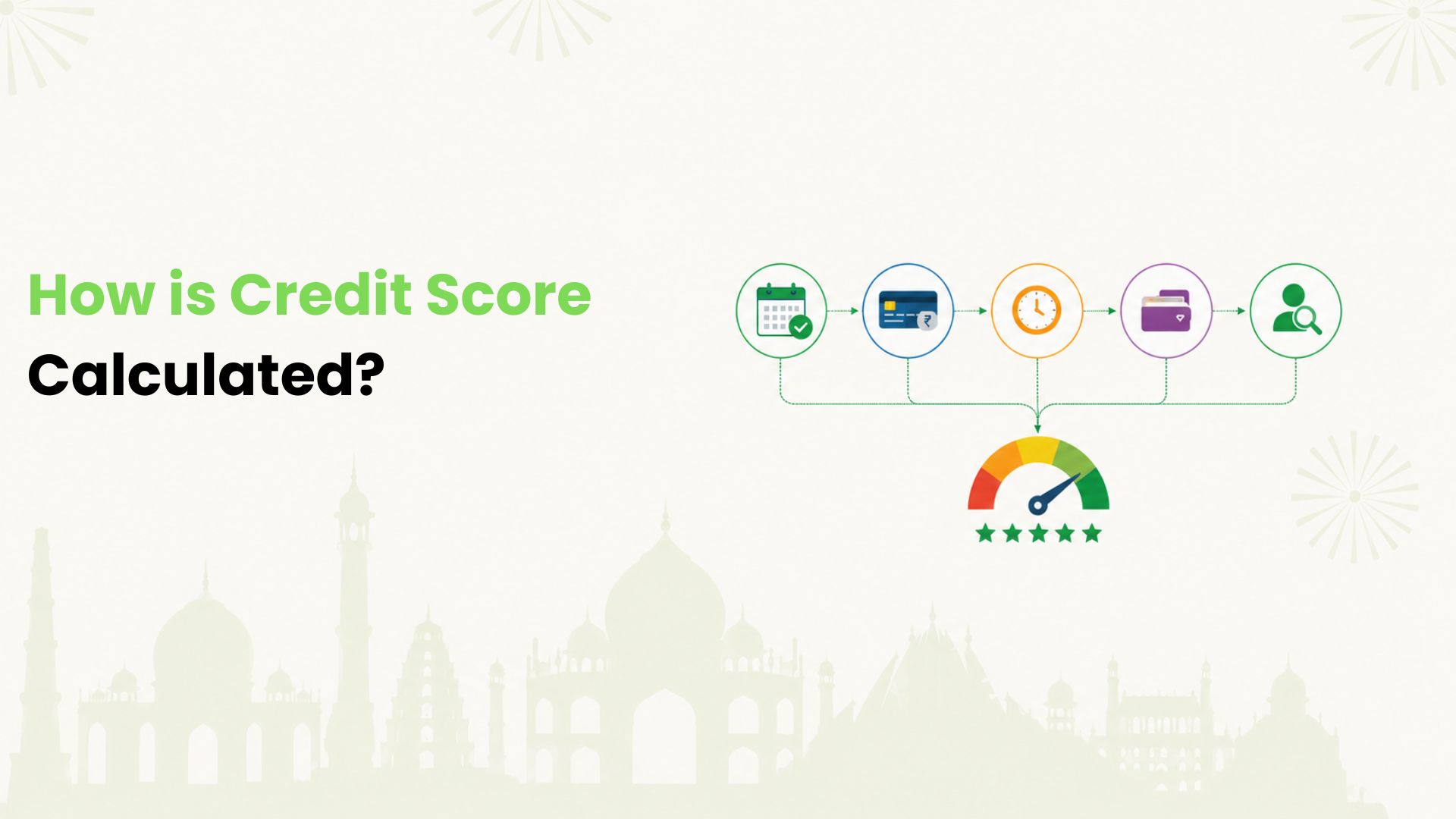
How is credit score calculated in India? Credit bureaus use the borrowing and repayment details in your credit report to estimate how likely you are to repay credit on time. For Indian borrowers, the score usually ranges from 300 to 900. A higher score generally suggests lower credit risk, but every lender makes its own approval decision.
There is no single public formula that applies to every bureau. TransUnion CIBIL, Experian, Equifax and CRIF High Mark use their own scoring models. However, they look at similar parts of your credit history.
From Credit Report to Credit Score
Banks and other credit institutions share information about your loans, credit cards, outstanding balances, payment status and credit applications with credit bureaus. A bureau organises this information into your credit report. Its scoring model then studies patterns in that report and produces a three-digit score.
This is why your credit report and credit score are connected but not identical. The report contains the account-level details. The score summarises the risk pattern found in those details.
5 Factors That Shape Your Credit Score
1. Repayment History
Repayment history shows whether you have paid credit card bills and loan EMIs on time. Late payments, missed payments, defaults and settled accounts can signal higher risk. A steady record of full, on-time payments can support a healthier score.
2. Credit Utilisation
Credit utilisation is the share of your available card limit that you are using. For example, if your combined credit limit is ₹1,00,000 and your reported balance is ₹40,000, your utilisation is 40%.
Regularly using a large share of your limit can suggest that you depend heavily on credit. Keeping balances manageable and paying them down can help. Even if you pay on time, track how much of your limit you use.
3. Length of Credit History
A longer credit history gives a bureau more information about how you manage borrowing over time. The age of your oldest account, the average age of your accounts and how long individual accounts have been active may all contribute.
Closing an old card may reduce your total available limit. Do not keep or close an account only for scoring purposes. Consider its fees, usefulness and your ability to manage it safely.
4. Credit Mix and Account Management
Your report may include secured credit, such as a home or vehicle loan, and unsecured credit, such as a personal loan or credit card. Managing different types of credit responsibly can provide a broader record of repayment behaviour.
Do not take a new loan just to create a mix. Unnecessary borrowing adds cost and repayment risk.
5. Recent Credit Enquiries
When you apply for a loan or credit card, the lender may request your report. This creates a hard enquiry. Several applications within a short period can suggest that you are seeking credit urgently and may affect your score.
Checking your own score is normally a soft enquiry and does not lower it. Compare products first, then make focused applications.
What Does Not Directly Decide Your Score?
Your salary, savings balance, age, education and job title are not normally used as direct credit-score factors. Lenders may still consider income, employment, existing obligations and eligibility separately when they assess an application.
Your score also does not judge whether a purchase was good or bad. It reflects how you manage reported credit, not what you bought.
Why Can Your Scores Be Different?
You may see different scores from different bureaus. Each bureau uses its own model, and not every lender may report the same information to every bureau at exactly the same time. A recent payment, new account or corrected error may therefore appear in one report before another.
Check the report behind the score. If you find an account you do not recognise, an incorrect balance or a payment wrongly marked late, raise a dispute with the bureau and the lender that supplied the data. RBI guidance allows individuals to obtain one free full credit report, including the score, from each credit information company once in a calendar year.
Habits That Can Support a Healthier Score
- Pay every credit card bill and EMI by the due date.
- Pay the total amount due whenever possible, not only the minimum amount.
- Keep card balances well within your available limits.
- Avoid several credit applications in a short period.
- Review your credit reports and dispute genuine errors.
- Borrow only what you can repay comfortably.
Credit scores change as new information reaches your report. Positive habits can help over time, but no action can guarantee a specific increase or approval outcome.
Make Responsible Credit More Rewarding with Kiwi
Your credit score is built one repayment at a time. Carry that discipline into everyday payments with Kiwi. Eligible users can use a RuPay credit card on UPI for merchant payments, manage card-led spends in the app, and earn cashback on qualifying scan-and-pay transactions.
Download Kiwi, complete your application in minutes, and pay your full card bill on time. Approval and the card issued depend on your credit score and partner-bank requirements. Product benefits, rewards and eligibility are subject to current terms.
FAQs
Is a Credit Score Calculated from Income?
No. A lender may still use your income and current obligations to decide whether you qualify and how much credit to offer.
Does Checking Your Own Credit Score Lower It?
No. It is generally a soft enquiry. A hard enquiry usually appears after you apply for credit.
Why Do Different Bureaus Show Different Scores?
Bureaus use different models and may update lender data at different times. Review the reports if the gap is large or unexpected.
How Quickly Can a Credit Score Improve?
There is no fixed timeline. Timely payments, lower balances and corrected errors may help after lenders report them, but improvement is not guaranteed.
Disclaimer: The information provided in this article is for general informational and educational purposes only and should not be considered financial or credit advice. Credit bureaus may use different scoring models, data sources, and update cycles, so credit scores can vary between bureaus. The factors and examples discussed are general explanations and should not be treated as a guaranteed formula for calculating any individual’s credit score. A particular credit score does not guarantee approval for a credit card or loan, as lenders may also consider income, existing obligations, repayment capacity, and their internal policies. Kiwi-related information is subject to applicable eligibility criteria, partner-bank requirements, product terms, conditions, and reward policies. Readers should verify the latest information with the relevant credit bureau, lender, bank, or financial service provider before making financial decisions.