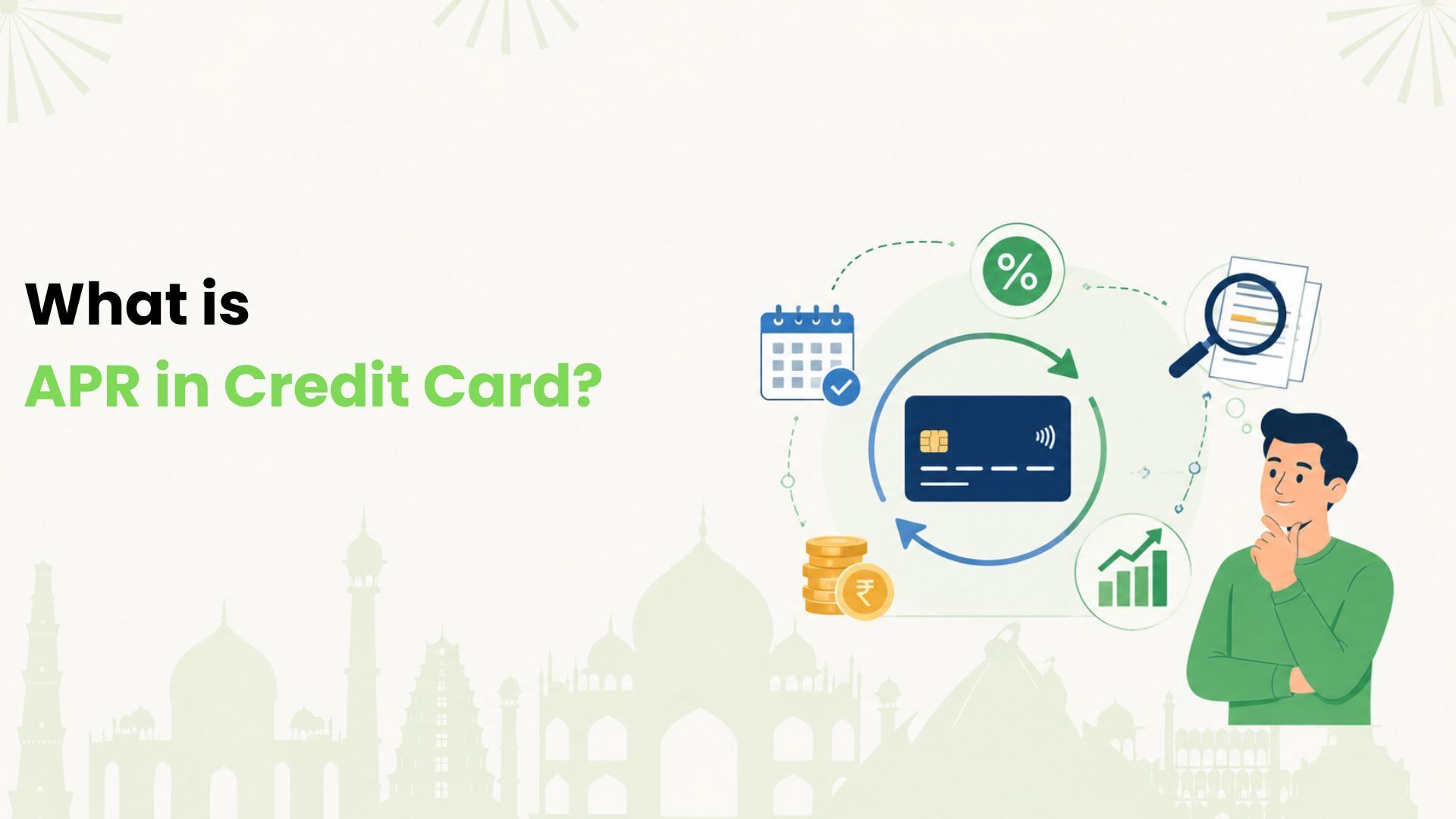
What is APR in credit card usage, and why should Indian credit card users care about it? APR stands for Annual Percentage Rate. It is the yearly rate used to show the cost of borrowing money on your credit card when you do not pay the full bill by the due date.
In simple words, APR becomes important when you carry an unpaid balance on your card. If you pay your total amount due in full and on time every month, you usually do not pay interest on regular purchases. But if you pay only the minimum amount due, miss the due date, or withdraw cash using your credit card, the APR can decide how expensive your borrowing becomes.
Why APR Matters on a Credit Card
A credit card gives you short-term access to credit. Used well, it can help you manage daily spends, track payments, and earn rewards. Used carelessly, it can become expensive because unpaid dues attract interest charges.
APR helps you compare the cost of carrying a balance across cards. A card with a higher APR will cost more if you keep unpaid dues for longer. This is why APR should not be ignored while choosing or using a credit card, even if rewards, cashback, fees, and app features look more exciting at first.
APR matters most in these situations:
- You pay less than the total amount due.
- You pay only the minimum amount due.
- You miss the payment due date.
- You withdraw cash using your credit card.
- You convert a transaction into an EMI and want to compare the cost.
- You are choosing between two cards and may carry a balance sometimes.
When is APR Charged?
APR is not charged just because you own a credit card. It usually applies when you borrow beyond the interest-free period or use a transaction type where the grace period does not apply.
For regular purchases, many credit cards offer an interest-free period if you pay the total amount due on time. The exact period depends on your billing cycle and card terms. Once you carry forward any unpaid amount, interest charges may apply to the outstanding balance. In many cases, new purchases can also lose the interest-free benefit until the previous dues are cleared.
Cash withdrawals are different. A credit card cash advance usually attracts interest from the date of withdrawal. It may also come with separate cash advance charges. This is why cash withdrawal through a credit card should be treated as a costly option and used only after checking your card terms.
How is Credit Card APR Calculated?
APR is shown as a yearly percentage, but credit card interest is often calculated on a daily or monthly basis. The exact method can vary by issuer, so always check your card’s Most Important Terms and Conditions.
A simple way to understand the calculation is:
Daily rate = APR / 365
Interest for the billing cycle = daily rate x average daily balance x number of days
Average daily balance means the average unpaid amount on your card across the billing cycle. If your unpaid balance keeps changing because of payments, fresh spends, or reversals, the interest calculation can also change.
APR Example
Suppose your credit card APR is 36% and you carry an unpaid balance of ₹10,000 for 30 days.
Daily rate = 36% / 365 = about 0.0986% per day
Daily interest = ₹10,000 x 0.0986% = about ₹9.86
Interest for 30 days = ₹9.86 x 30 = about ₹296
This is a simplified example. Your actual bill may differ because issuers may apply interest from specific dates, include taxes, apply separate charges, or calculate interest differently for purchases, cash advances, EMIs, and overdue amounts.
Types of APR on Credit Cards
Different credit card transactions can have different APRs. Before using a card, check which APR applies to which transaction.
Purchase APR
Purchase APR applies to regular purchases made with your credit card. This is the rate most people think of when they talk about credit card APR. You can usually avoid purchase APR by paying the total amount due in full by the payment due date.
Cash Advance APR
Cash advance APR applies when you withdraw cash using your credit card. This rate can be higher than the purchase APR and may start from the day of withdrawal. A cash advance fee may also apply.
Balance Transfer APR
Balance transfer APR applies when you move unpaid dues from one credit card to another. Some issuers may offer a lower promotional rate for balance transfers, but the offer should be checked carefully for processing fees, duration, and the rate that applies after the offer period ends.
Introductory APR
Introductory APR is a promotional rate offered for a limited period. It may be lower than the regular APR. Once the promotional period ends, the standard APR can apply.
Penalty APR
Penalty APR may apply when card terms are violated, such as repeated missed payments. Not every card uses the same structure, so check your issuer’s terms before assuming how penalty interest will work.
APR vs Interest Rate: Are They the Same?
APR and interest rate are closely related, but they are not always identical.
The interest rate usually refers to the cost charged on the borrowed amount. APR is meant to show the annualised cost of borrowing. In credit cards, people often use the terms interchangeably because the main cost is the interest charged on unpaid dues. However, the card’s terms can also include other charges, such as annual fees, late payment charges, cash advance fees, EMI charges, and taxes.
That is why you should compare more than just APR. Look at the annual fee, joining fee, late payment charges, reward structure, cashback rules, cash withdrawal charges, EMI terms, and repayment flexibility.
What is a Good APR for a Credit Card?
A good APR is generally a lower APR compared with similar cards in the market. In India, many credit card interest rates are quoted monthly and annualised into APR. Some cards may charge around 30% to 48% per annum, while certain cards may be lower or higher depending on the issuer and product.
But the “best” APR for you depends on how you use the card. If you always pay the total amount due on time, rewards, fees, acceptance, app controls, and statement clarity may matter more in daily use. If you sometimes carry a balance, APR becomes a much bigger factor because it directly affects your interest charges.
How to Avoid or Reduce APR Charges
The easiest way to avoid credit card APR charges is to pay the total amount due in full before the due date. Paying only the minimum amount due keeps the account active, but it does not make the remaining balance interest-free.
Use these habits to keep interest charges under control:
- Pay the total amount due every month.
- Set reminders before the payment due date.
- Avoid cash withdrawals through your credit card.
- Spend within an amount you can repay comfortably.
- Check the APR, late payment charges, and cash advance terms before applying.
- Review your credit card statement every month.
- Consider EMI conversion only after checking the full cost.
- Pay more than the minimum amount due if you cannot clear the full bill immediately.
APR and UPI Credit Card Usage
UPI on credit can make everyday merchant payments easier, especially when you use a RuPay credit card linked to UPI. You can scan and pay at eligible merchants, track transactions in the app, and manage your card-led spends more clearly.
But APR rules still matter. If the transaction is billed to your credit card and you do not pay the total amount due on time, interest charges can apply as per your card terms. Rewards should never be a reason to ignore repayment discipline.
Kiwi helps users make eligible merchant UPI payments using credit, with app-based controls and rewards on qualifying transactions. The Kiwi credit card experience is designed for everyday payments such as groceries, food delivery, QR payments, utility bills, and other merchant spends. Kiwi’s current public page mentions minimum 1.5% cashback on eligible QR payments and a lifetime free card with no joining fee or annual fee, subject to product terms and eligibility.
Use Credit Smarter with Kiwi
APR is a reminder that credit cards work best when they are used with control. Pay your full bill on time, avoid cash advances, and keep track of every transaction.
With Kiwi, you can use a RuPay credit card on UPI for eligible merchant payments, earn cashback on qualifying spends, and manage your card experience through the app. If you want UPI convenience with credit-card utility, download Kiwi and apply in minutes. Approval and the card issued depend on your credit score and partner bank requirements.
FAQs
Does APR matter if I pay my credit card bill in full?
APR matters less if you pay the total amount due in full and on time every month. For regular purchases, you can usually avoid interest charges this way. APR becomes important when you carry forward unpaid dues, miss the due date, or use cash advances.
Is APR charged monthly?
APR is shown as a yearly rate, but the interest may be calculated daily or monthly on unpaid dues. Check your credit card terms to understand the exact calculation method.
Is APR the same as the annual fee?
No. APR is related to the cost of borrowing when you carry a balance. An annual fee is a card ownership charge. A card can have an annual fee, APR, late payment charges, cash withdrawal charges, and other fees.
Does paying only the minimum amount due avoid APR?
No. Paying the minimum amount due can help you avoid being marked as unpaid, but interest charges can still apply on the remaining unpaid balance. Try to pay the total amount due whenever possible.
Does cash withdrawal have a higher APR?
Cash withdrawal through a credit card usually has a higher cost. Interest may start from the date of withdrawal, and a cash advance fee may also apply. Check your card terms before using this option.
Can APR affect my credit score?
APR itself does not directly decide your credit score. But payment behaviour does. Missed payments, high unpaid balances, and repeated minimum payments can affect your credit profile over time.
How can I find my credit card APR?
Check your card’s Most Important Terms and Conditions, schedule of charges, welcome kit, monthly statement, or issuer website. The RBI expects card issuers to disclose annualised percentage rates and calculation methods clearly.
Disclaimer: This article is for general informational and educational purposes only and should not be considered financial or credit advice. Credit card APR, interest rates, fees, charges, billing practices, and repayment terms may vary by issuer and product. Actual costs may depend on the outstanding balance, billing cycle, transaction type, repayment behaviour, and applicable taxes. Kiwi-related features, cashback, rewards, eligibility, and offers are subject to product terms, partner-bank requirements, and prevailing conditions. Readers should review the latest MITC, schedule of charges, and official product terms before using or applying for any credit product. Please verify the latest information with the relevant bank, card issuer, or financial service provider before making any financial decision.