RuPay credit cards were a niche product until 2022. Since then they grew fast. UPI integration changed everything. The numbers below show how.
Quick takeaway
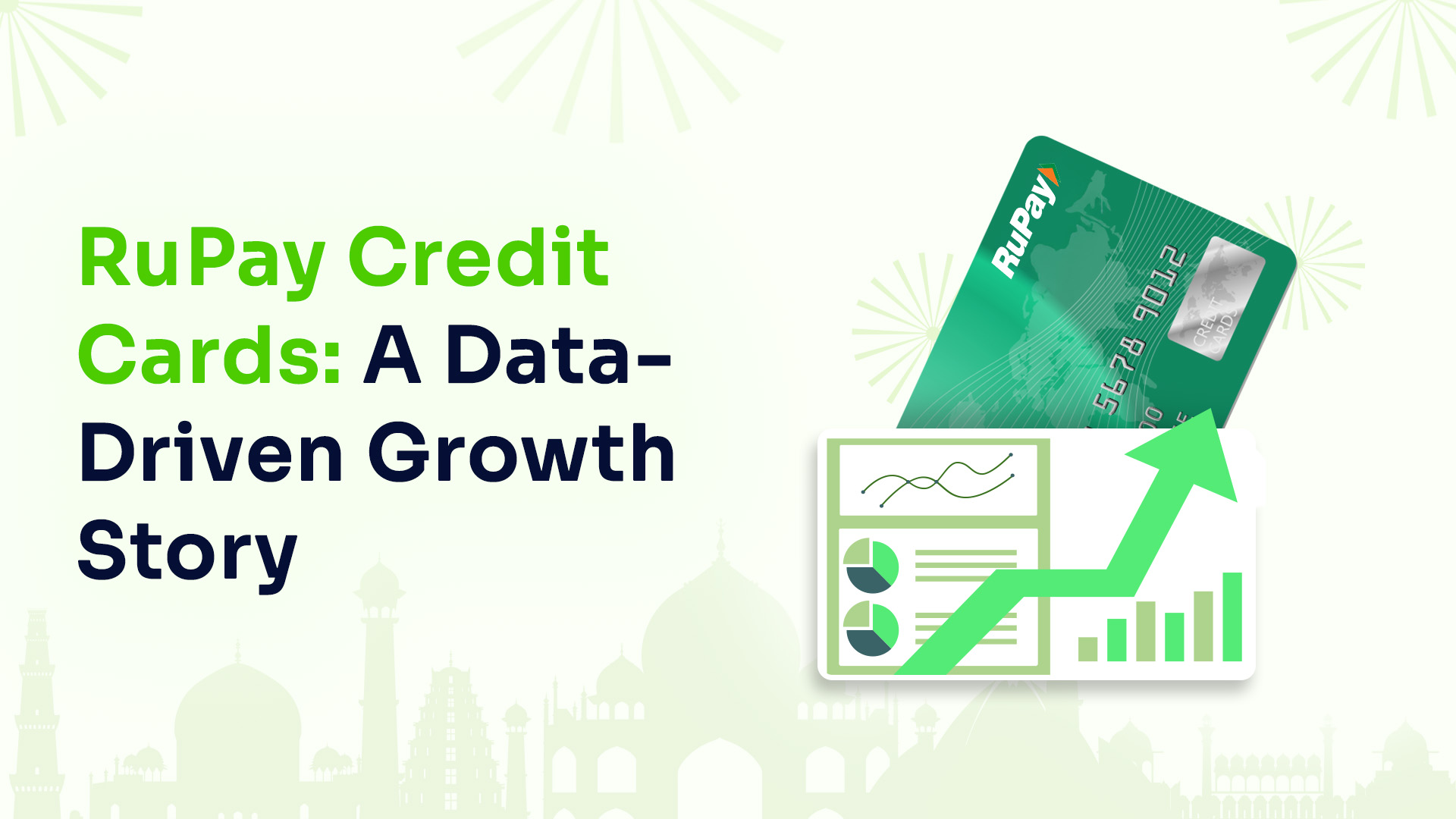
RuPay leveraged UPI to scale credit-card usage. Market share jumped from low single digits to the mid-teens in a few years. Transaction volumes via RuPay credit cards on UPI moved from tens of millions to hundreds of millions annually.
Key milestones and timeline
2012 — RuPay launched by NPCI. It focused first on debit cards.
June 2022 — RBI allowed credit cards to be linked to UPI (initially RuPay got exclusive access). This was the turning point.
September 2022 — UPI-linked credit card flows went live. Adoption started immediately.
FY24 (Apr 2023–Mar 2024) — RuPay credit card-linked UPI did hundreds of millions of transactions. Official parliamentary data and ministry reports capture year-on-year rises. Data.gov India+1
2024–2025 — Reports show RuPay’s credit-card share climbed sharply (reports cite ~16–18% share by late 2025 in some industry pieces), driven largely by UPI usage. ETBFSI.com+1
Hard numbers (volume, value, share)
Transactions via RuPay credit cards on UPI:
By October 2024, ~750 million transactions worth ₹63,825.8 crore had been processed since the feature launched. In FY24 the comparable figure was ~362.8 million transactions worth ₹33,439.24 crore. This shows roughly a doubling in less than a year. Business Standard+1
Active RuPay credit cards:
RuPay crossed ~10 million active credit cards by December 2023, according to industry tracking and NPCI summaries. Usage and card counts rose after UPI-linking. Wikipedia
Market share:
Industry reports and market trackers indicate RuPay’s credit-card share rose from ~3–4% (pre-UPI) to ~16–18% by late 2025 in volume terms. Different outlets report slightly different numbers, but all show steep, recent gains. Whalesbook+1
What caused the growth — data-backed drivers
UPI linkage (policy change). RBI’s 2022 permission allowed RuPay credit cards to be used through UPI. That removed card-pos friction and opened QR/UPI channels to credit. Adoption jumped after that regulatory move.
Merchant reach via QR. More than 5 crore merchants accept UPI QR codes. Many small merchants don’t use POS machines. Linking credit to UPI made credit usable where cards weren’t before. That created a new ecosystem for credit usage.
Bank and NPCI push. NPCI and banks incentivised RuPay credit issuance. NPCI ran marketing and partner deals. Several banks rolled out RuPay credit products aggressively.
Consumer behaviour. UPI’s convenience made small, frequent credit usage attractive. Reports show UPI credit transactions grew at ~20% monthly in adoption metrics during early 2025. Business Standard
Economic and market implications
Higher card penetration into small-ticket retail. Credit moved into neighbourhood stores and services. This changed spending patterns and increased credit card transaction counts.
Competitive pressure on global networks. Visa and Mastercard still lead in value terms. But RuPay’s volume gains force pricing, product, and acceptance changes across players.
Acceleration of digital credit data. More transactions on digital rails create credit footprints. That helps alternate scoring and small-ticket lending. Policy and market reports point to improved access to short-term credit for small businesses.
Infrastructure & risk. Rapid scaling requires settlement, fraud prevention, and dispute resolution upgrades. Regulators and NPCI continue to monitor operational risk and consumer protection.
Limits and caveats
- Different sources use different measures (volume vs value vs active cards). Compare carefully.
- Some headline market-share numbers are industry estimates. Use official NPCI and government releases for audited counts when possible.
Conclusion
RuPay credit cards went from fringe to mainstream in a short span. UPI linkage triggered the shift. Volumes rose rapidly. Market share climbed into the mid-teens by late 2025 in several industry reports. The growth reshapes how Indians use credit, especially for small everyday spends.