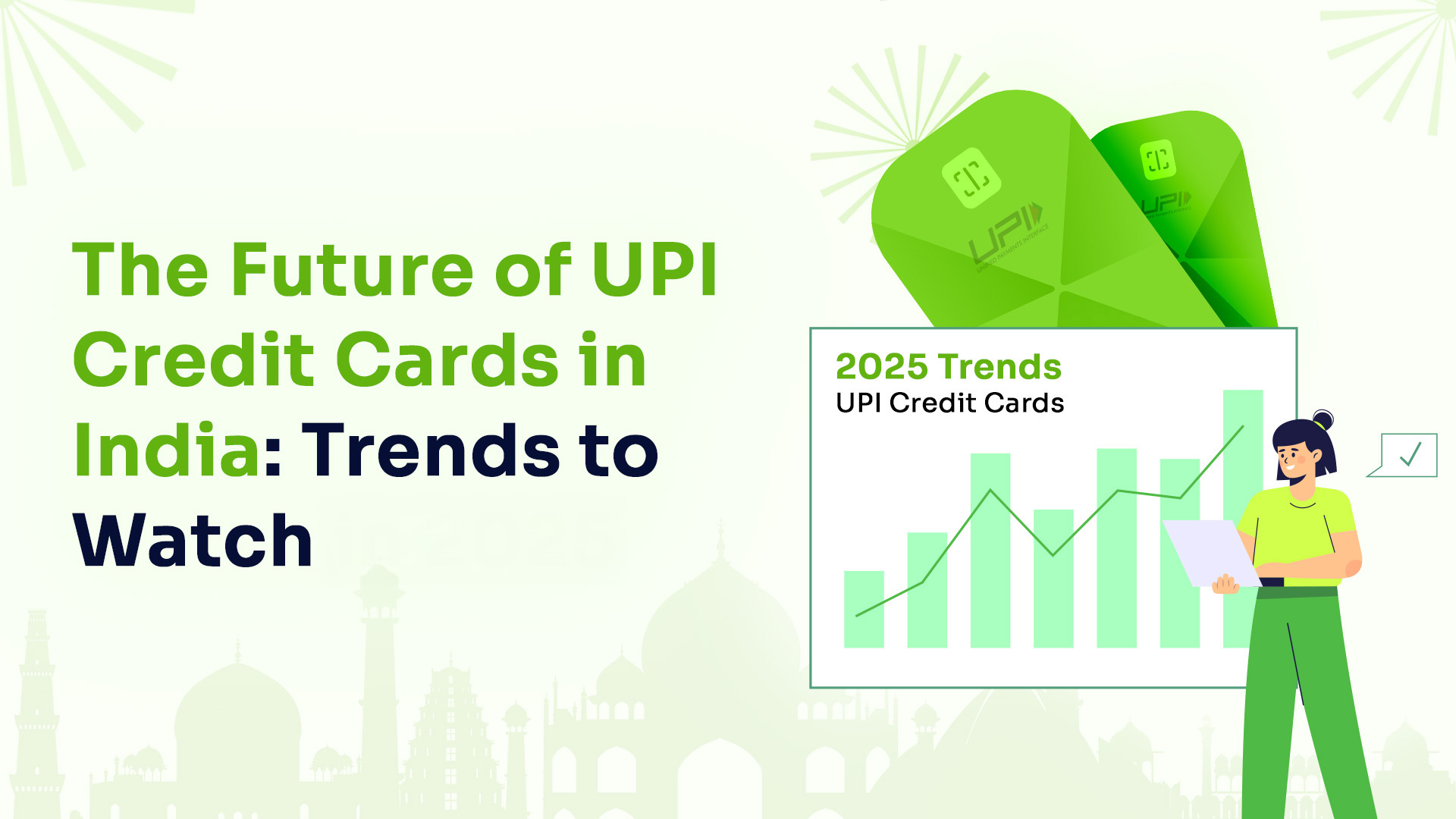
UPI credit cards are no longer an experiment. In 2026, they will become infrastructure. What started as a feature is now reshaping how India pays, borrows, and manages daily spending. Here are the key trends defining UPI credit cards in 2026.
1. UPI + Credit Cards Are Now a Default Use Case
RuPay credit cards linked to UPI have crossed early-adopter territory. Scanning a QR and paying from a credit line now feels natural.
No swipe.
No POS dependency.
This matters because UPI QR codes already exist everywhere. From metros to tier-3 towns.
By 2026:
- Credit cards are usable at millions of small merchants
- Offline acceptance is no longer a bottleneck
- Credit usage blends into everyday UPI behaviour
The result: credit stops feeling like a “card product” and starts behaving like UPI itself.
2. UPI Continues to Dominate — Credit Rides on Top
UPI remains India’s largest retail payment rail. It handles the majority of transaction volume across the country. Credit cards still grow in absolute numbers. But their relevance now comes from integration, not competition.
UPI-linked credit cards:
- Extend credit into QR-first environments
- Increase average ticket size at small merchants
- Convert debit-like behaviour into credit-led spending
UPI becomes the interface. Credit becomes the layer underneath.
3. RuPay Strengthens Its Position
RuPay is no longer just the “domestic alternative.” Because it works natively with UPI, it is uniquely placed in India’s ecosystem.
By 2026:
- A large share of new credit cards issued are RuPay
- UPI compatibility is a major decision factor for users
- Acceptance matters more than premium branding
This gives RuPay a structural advantage over global networks in India’s QR-led market.
4. Credit Access Is Expanding — Carefully
UPI credit cards are pulling in new-to-credit users.
People who:
- Never swiped cards
- Rarely used POS machines
- Mostly paid via UPI from savings accounts
Now access:
- Small, controlled credit limits
- Secured or semi-secured products
- Clear repayment cycles via monthly statements
This is credit democratisation — without reckless expansion. Regulators and issuers are balancing growth with guardrails.
5. Debit Cards Fade From Daily Payments
Debit cards are slowly exiting the payment conversation.
In 2026:
- UPI handles daily spends
- Credit cards handle credit
- Debit cards are mainly used for ATM withdrawals
For merchants and users, debit cards add little incremental value in a QR-first economy. UPI credit cards replace them for most retail use cases.
6. Rewards Shift From “Luxury” to “Utility”
Consumers are done with confusing reward charts.
What works in 2026:
- Flat cashback
- Instant value
- Simple exclusions
UPI credit cards that reward everyday offline spends see higher usage than cards built only for travel or luxury. Rewards move closer to daily life.
7. Regulation Enables, Not Restricts
Both the Reserve Bank of India and National Payments Corporation of India continue to support controlled innovation.
Key directions shaping 2026:
- Better credit reporting frequency
- Stronger fraud controls
- Wider merchant enablement
- Financial literacy around digital credit
The focus is not just scale. It’s sustainable scale.
Where Kiwi Fits in This Future
Kiwi is built for this exact moment.
- RuPay credit card
- Linked directly to UPI
- Works on standard QR codes
- Designed for everyday offline spending
No habit change needed. Just better outcomes from the same UPI scan. Kiwi reflects how India actually pays in 2026.
Key Takeaways for 2026
- UPI credit cards move from “new” to “normal”
- RuPay gains structural advantage via UPI
- Credit access widens beyond traditional card users
- Debit cards continue to lose relevance
- Simplicity beats complexity in rewards
- UPI becomes India’s universal payment + credit interface
Final Thought
The future of UPI credit cards is not about cards at all.
It’s about:
- Making credit invisible
- Embedding it into daily payments
- Giving users control without friction
In 2026, UPI credit cards are no longer the future. They are the present.