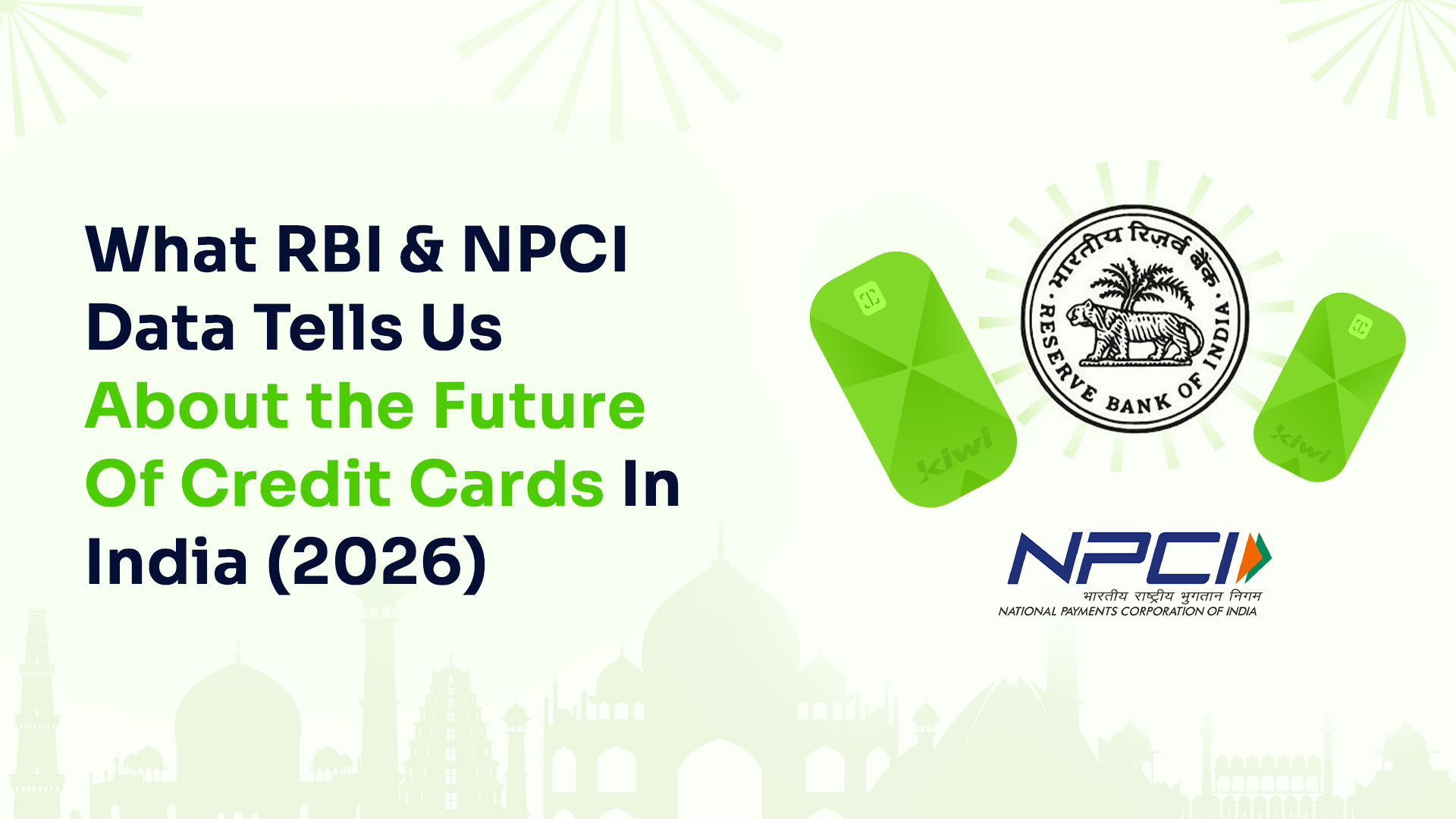
India’s payments landscape is changing faster than ever before. Two institutions sit at the heart of this transformation: the Reserve Bank of India (RBI) and the National Payments Corporation of India (NPCI). Their data not only shows where we are today, but also paints a clear picture of where credit cards — especially UPI-linked ones — are headed in 2026 and beyond.
Let’s dive into the key trends supported by fresh RBI and NPCI insights, and what they mean for the future of credit cards.
1. Digital Payments Have Nearly Taken Over All Transactions
According to the latest RBI payment systems data, digital payments now account for nearly 99.8% of all transactions in India by volume, with UPI leading the way.
This shift shows that Indians are comfortable with digital payments — and UPI is central to this transition. As credit card networks adapt to this behaviour, the way credit cards are used is also evolving.
2. UPI is Dominating Daily Payments
NPCI’s UPI product statistics show that UPI continues to handle tens of billions of transactions every month, with yearly volumes climbing sharply.
UPI’s overwhelming dominance in everyday payments is one reason credit on UPI — where credit cards can be used through QR codes and app flows — makes so much sense for the Indian market.
3. Credit Card Usage Is Still Growing — But Patterns Are Changing
RBI data shows credit card transaction volumes have more than doubled between 2019 and 2024.
But here’s the twist:
- Traditional credit card use is still growing for larger and online spends.
- Debit card usage for day-to-day transactions is falling as UPI absorbs low-value digital payments.
This means the role of credit cards is expanding beyond big purchases — especially when linked with UPI.
4. UPI Credit Cards Are Becoming Mainstream
NPCI estimates show that about 16% of all credit card spending comes through the RuPay network, with nearly half of these transactions being made via UPI.
Other studies suggest that credit cards enabled on UPI register significantly higher transaction frequency — up to eight times that of traditional cards.
This suggests a major behavioural shift: credit is increasingly used like UPI — frequent, small, convenient.
5. Credit on UPI Expands Usage Beyond Big Spends
Unofficial data from payment trend reports also point out that UPI-linked credit cards have become popular for everyday transactions at local shops, grocery stores, fuel stations, etc. These are places where traditional credit cards had limited reach before.
This aligns with RBI’s broader payment trends showing UPI’s overwhelming share of daily volumes and value.
6. Card Market Structure Is Also Evolving
RBI’s 2025 report shows that India had over 111 million credit cards outstanding by mid-2025 — a significant uptick from earlier years.
At the same time, digital and UPI-linked approaches are shaping how these cards are actually used.
7. UPI’s Growth Sets the Stage for Credit Expansion
NPCI’s data highlights UPI’s sheer scale — processing around 22 billion monthly transactions topping ₹27.97 lakh crore in December 2025 alone.
This means more payment occasions, more frequent use, and a huge opportunity to embed credit directly into what consumers already do every day.
What This Data Means for the Future of Credit Cards
1. Everyday Credit Will Become Normal
People are using digital payments for routine spends. Linking credit to UPI makes credit cards part of daily life. No more saving cards just for big purchases.
2. RuPay and UPI Will Drive the Next Growth Wave
With RuPay linked to UPI and easier acceptance via QR codes, credit cards are now accessible to millions of merchants who never had credit card machines before.
3. Traditional Credit Cards Won’t Disappear — They’ll Evolve
High-value, planned spending still works well with traditional cards. But UPI-linked credit adds frequency to credit usage, making it more relevant for modern consumers.
4. Tracking and Control Will Matter More
With so many daily uses, consumers will demand tools that help them manage and view all credit activity in one place.
Where Kiwi Comes In
Platforms like Kiwi are designed for this new future.
Kiwi integrates credit directly into UPI flows so users pay the same way they already do — with QR codes, in apps, in seconds. This takes advantage of UPI’s huge transaction volumes and patterns, turning everyday spends into credit opportunities. And because all transactions are tracked, users get clarity, control, and rewarded credit behaviour without the complexity of traditional cards.
Bottom Line: RBI + NPCI Data Shows a Clear Trend
- Digital payments are near-universal.
- UPI dominates everyday payment volumes.
- Credit cards linked to UPI are breaking into daily use cases.
- Traditional credit cards still matter, but their role is shifting.
The future of credit in India is not about bigger tickets — it’s about more frequent, integrated, and user-friendly credit. And UPI-enabled credit cards are poised to lead that shift.