Paying monthly bills should be simple. But with so many payment options today, most people get confused between using a credit card or setting up UPI AutoPay. Both are fast. Both are digital. But they work very differently when it comes to rewards, charges, and convenience. This 2026 guide helps you understand which option gives you better value.
How Credit Card Bill Payments Work
When you pay your bills using a credit card, you get three clear advantages:
- Interest-free period
You pay now but settle the bill later. This gives you 20–45 days of extra liquidity. - Cashback or rewards
Many cards offer cashback on electricity, broadband, DTH, OTT, and mobile recharge. - Better tracking
Your entire bill history sits in one statement. It keeps your finances organised.
The downside?
If you miss a payment, interest and late fees can hit you hard. You must use credit cards responsibly.
How UPI AutoPay Works
UPI AutoPay lets you set automatic payments for recurring bills.
It works for:
- Mobile recharge
- OTT subscriptions
- Electricity
- Water
- Gas
- Insurance premiums
- SIPs (for some apps)
The payment triggers automatically on the scheduled date from your bank account or UPI-linked wallet.
Key advantages:
- Zero extra cost
No interest. No late fee. No hidden charges. - Instant setup
You can activate AutoPay in one tap using Google Pay, PhonePe, or BHIM. - Perfect for small recurring payments
OTT or app subscriptions become easier to manage.
The downside?
UPI AutoPay usually doesn’t give cashback. And there is no grace period.
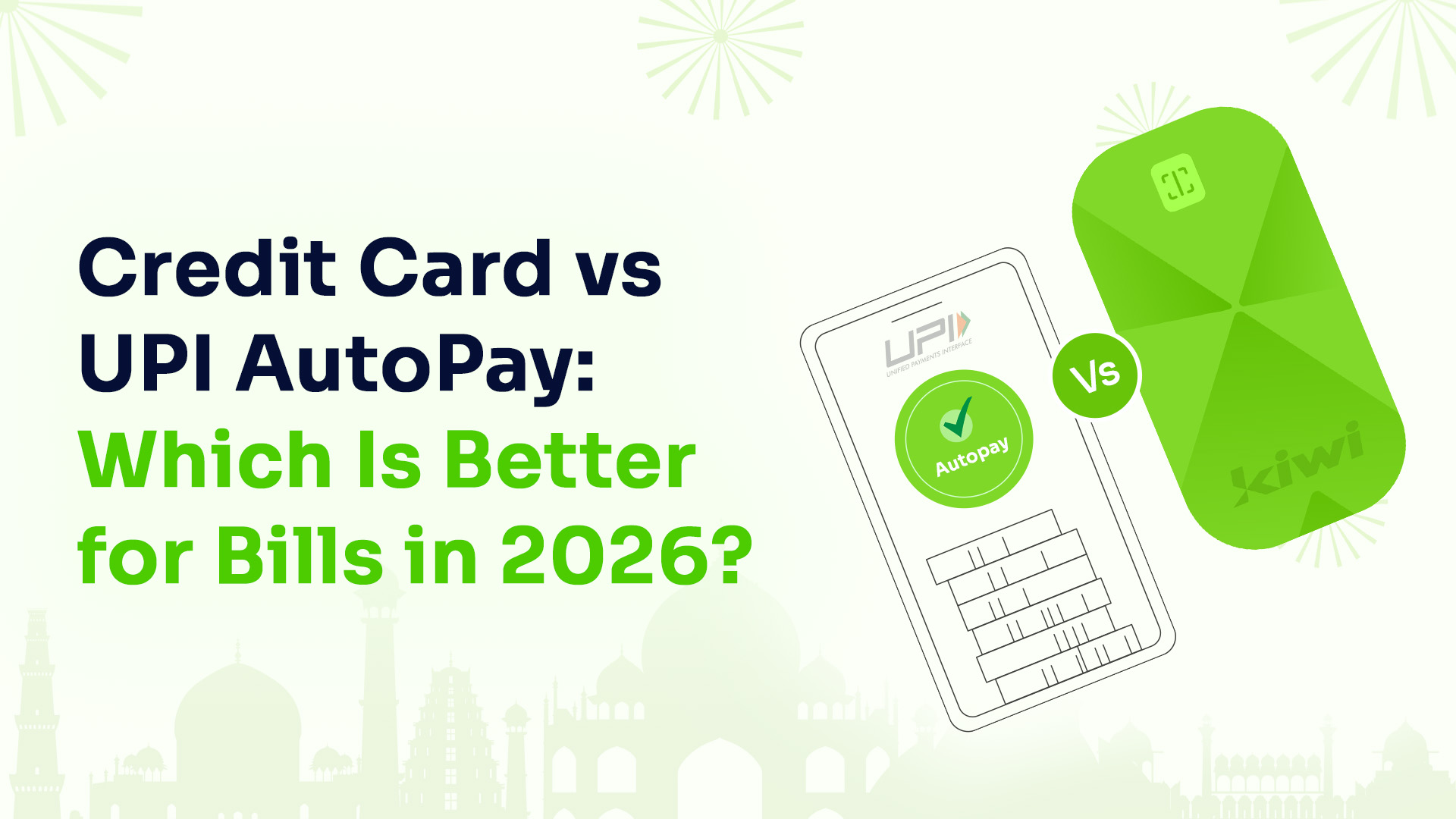
Credit Card vs UPI AutoPay: Quick Comparison
| Feature | Credit Card | UPI AutoPay |
| Rewards | Yes, cashback & points | Usually none |
| Liquidity | 30–45 days extra | Immediate debit |
| Late fee risk | High if you miss payment | None |
| Setup | Manual each time or AutoPay on card | One-time setup |
| Bill tracking | Centralised in one statement | Scattered in apps |
| Ideal for | Big bills & reward maximization | Subscriptions & small bills |
Which Option Saves You More Money?
Credit cards win if you want cashback. Electricity, broadband, OTT bundles, and mobile plans often earn 1% to 5% cashback depending on your card.
If your card supports UPI merchant payments (like a RuPay credit card via Kiwi), you can even set up payments directly through Google Pay or PhonePe and still get cashback on merchant categories. This gives you the convenience of UPI and the benefits of a credit card.
UPI AutoPay is best if you want:
- Zero maintenance
- Zero fees
- Guaranteed on-time payments
- No risk of overspending
What Should You Use in 2026?
Use credit cards for:
- Electricity
- Broadband
- Mobile recharge
- Gas
- Insurance premiums
- OTT bundles
- Any bill where you can earn cashback
Use UPI AutoPay for:
- Small subscriptions
- App renewals
- Gym memberships
- Monthly SaaS tools
- Payments under ₹500
- Payments where the merchant doesn’t allow credit cards
Final Verdict
Both systems are strong. But for most people in 2026, a credit card offers better financial value because of rewards, tracking, and liquidity.
Use UPI AutoPay only for small repetitive payments and subscriptions.