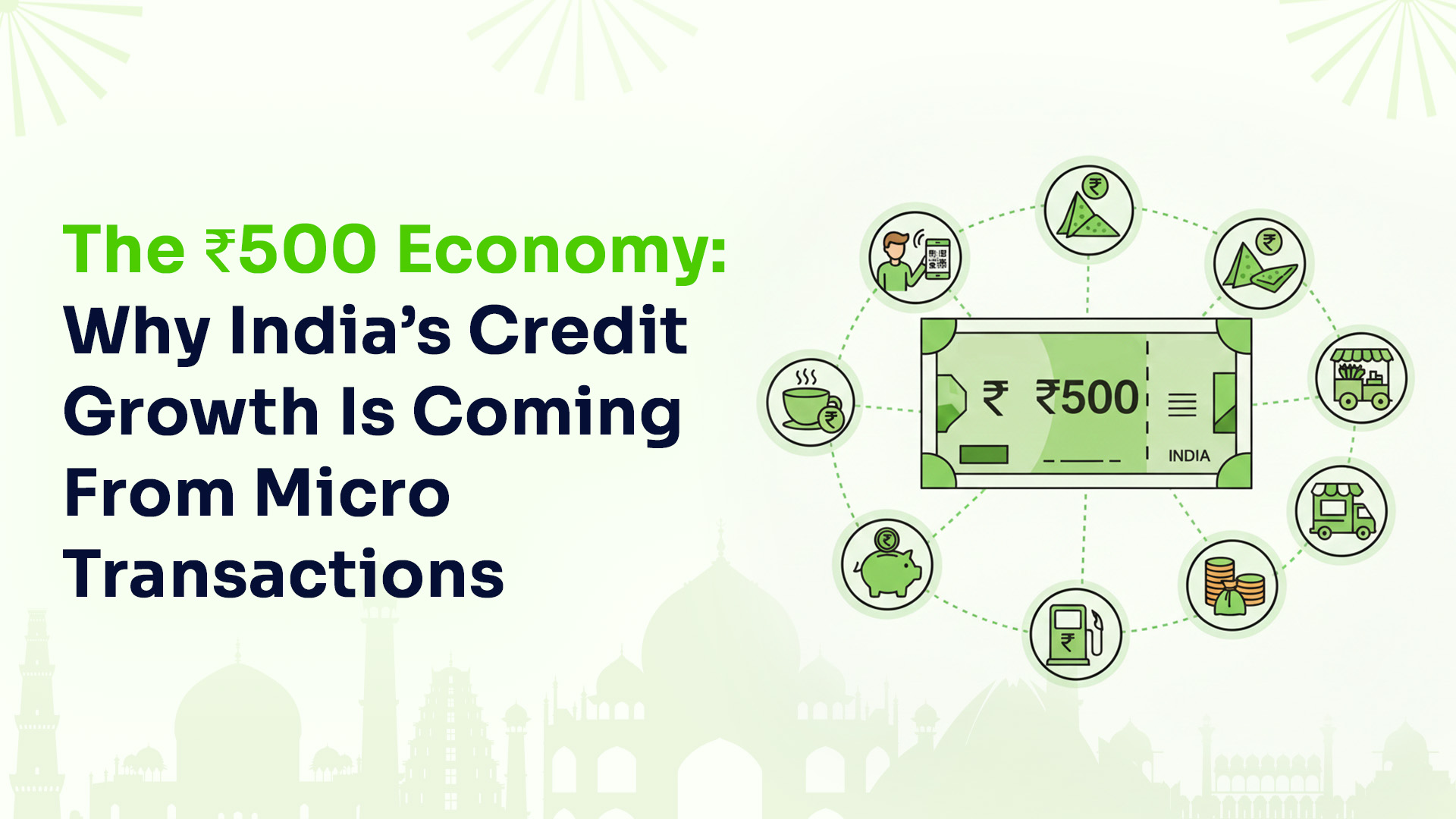
India’s credit growth story is changing. It is no longer driven only by large purchases. It is driven by ₹200. ₹300. ₹500 transactions. Welcome to the ₹500 economy.
Credit is becoming an everyday utility
A decade ago, credit cards were used for large expenses. Today, credit is part of daily life.
People use it for:
- Grocery runs
- Food delivery
- Cab rides
- Pharmacy purchases
- Utility bills
- Quick commerce
Most of these transactions are under ₹1,000. And many are under ₹500.
The shift happened because UPI changed its behaviour. Paying digitally became frictionless. Now adding credit to that same QR flow makes it even easier. Credit is no longer a “big decision.” It is just another payment option at checkout.
The Micro-Transaction Explosion
Most UPI transactions are below ₹1,000.
These include:
- Grocery runs
- Food delivery
- Cab rides
- Pharmacy purchases
- Utility bills
When credit enters this ecosystem, usage frequency rises dramatically.
Why Micro Credit Matters
Small transactions:
- Increase card activity
- Build repayment history
- Improve credit behaviour visibility
They make credit part of everyday life. Earlier, credit meant emergencies or big-ticket buys. Now, it means daily utility.
The Hidden Risk
There is one problem. Small spends feel harmless. ₹250 does not feel like debt. ₹400 feels routine. But 25 such transactions become ₹10,000 quickly. Without tracking, accumulation becomes invisible.This is where many users struggle. The ₹500 economy requires discipline. Because the danger is not size. It is frequency.
Why Banks Like the ₹500 Economy
Frequent transactions create:
- More data
- Better risk modelling
- Predictable usage patterns
Small-ticket behaviour is easier to analyse than sporadic large purchases.
Kiwi and the Micro-Spend Model
Kiwi operates primarily in QR-based, small-ticket environments. This matches India’s real spending pattern.
Users can:
- Track daily QR transactions
- Monitor billing cycles
- Avoid silent accumulation
In the ₹500 economy, visibility becomes power. The future of credit in India will not be luxury-led. It will be utility-led. And micro transactions will define growth.
The Future of Credit in India
India’s credit growth will not be luxury-led. It will be utility-led. The real revolution is not a ₹50,000 swipe. It is the silent rise of ₹500 transactions happening millions of times daily. The ₹500 economy is not small. It is massive in scale. And it is redefining how India uses credit.
FAQs
1. Why are small-ticket transactions increasing in India?
UPI adoption has made digital payments convenient for everyday purchases, leading to higher micro-transaction volumes.
2. Do small UPI credit transactions affect credit score?
Yes. Frequent usage with timely repayments builds positive credit history.
3. Can micro transactions lead to overspending?
Yes. Small spends may feel insignificant individually but accumulate quickly without tracking.
4. Why do banks prefer frequent small transactions?
Frequent transactions provide consistent behavioural data, improving risk assessment models.
5. Is the ₹500 economy sustainable for long-term credit growth?
Yes. As long as users repay responsibly, micro-credit usage can drive steady and sustainable credit expansion.