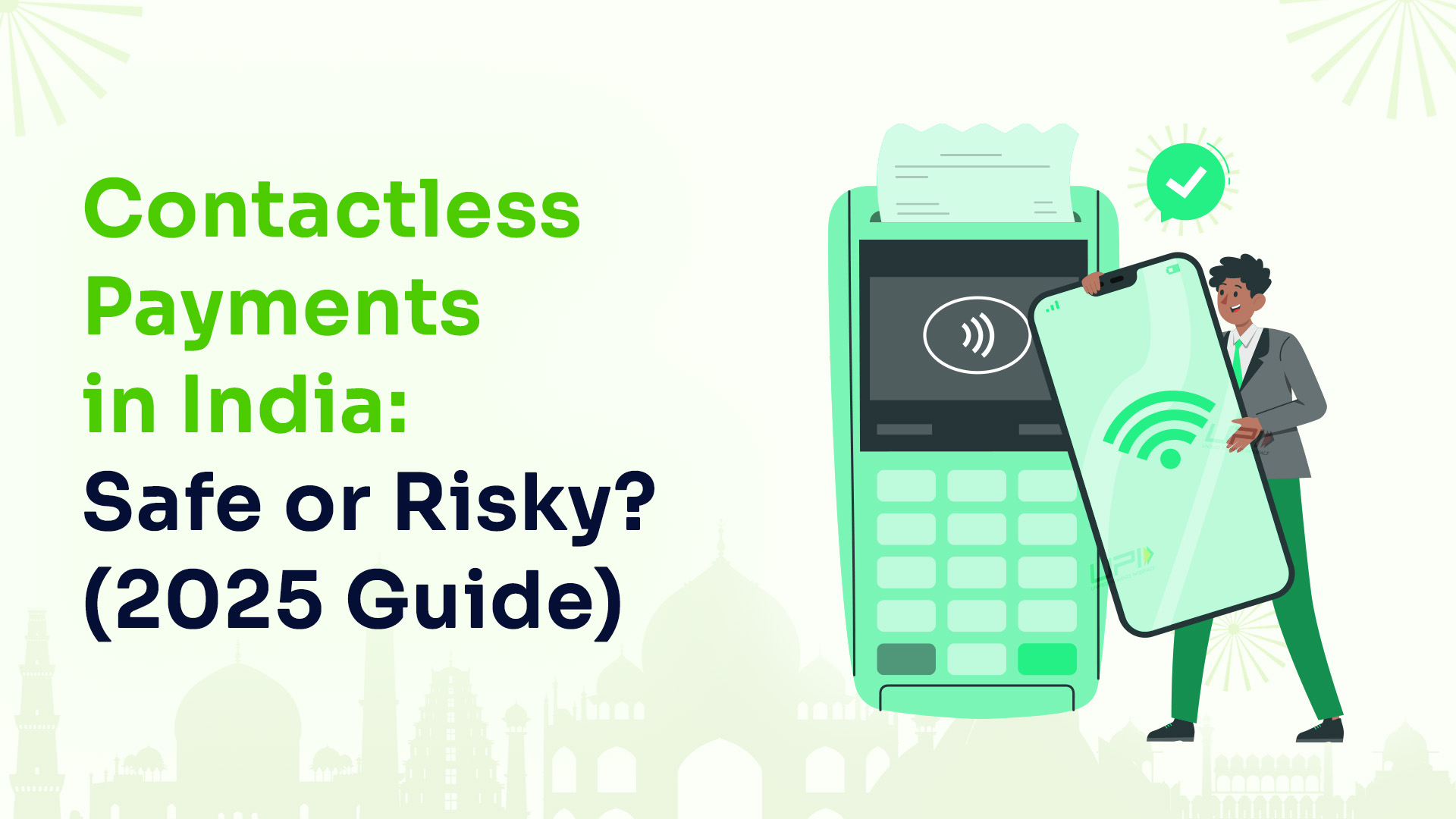
India’s payments ecosystem is racing towards a fully digital future, with contactless credit cards, debit cards, and mobile wallets now mainstream in metros and Tier 2/3 cities. Tap-to-pay transactions at supermarkets, fuel stations, and even local merchant stalls have grown exponentially, leading many users to ask: Are contactless payments really safe in India today?
How Contactless Payments Work in India
Contactless card payments use NFC (Near Field Communication) to transmit encrypted data over very short distances—usually under 4 centimeters—when you tap your card, phone, or smartwatch on a compatible terminal. For purchases up to ₹5,000, no PIN is required, increasing convenience but also sparking security questions.
Regulatory Framework & Key Security Features
- Transaction Limit: As per Reserve Bank of India (RBI) rules, all contactless transactions without PIN are capped at ₹5,000. For anything above this, a PIN is required, limiting risks from lost or stolen cards.
- Encryption: Each contactless payment generates a unique, dynamic transaction cryptogram. Card details are never transmitted in plain text, making intercepted data useless for fraudsters.
- Short Range: Tap-and-pay cards only interact with terminals when distances are less than 4cm; accidental or “drive-by” fraud is virtually impossible.
- Automatic Timeout: Transactions time out quickly if the card is not tapped within a few seconds, preventing unauthorized use.
Common Myths vs Reality
| Myth | Reality |
| Criminals can steal money by standing nearby with a reader | Transactions require KYC-verified, traceable merchant terminals; fraud is extremely rare |
| Contactless cards are easily cloned | High-level encryption and secure chips make cloning nearly impossible |
| Stolen cards allow unlimited purchases | Spending is capped by RBI rules; banks have fraud protection policies if reported promptly |
Latest Trends and Threats
- Over 76% growth in contactless transactions in 2024–25 as predicted by RBI.
- Fraud rates remain low: Less than 0.02% of contactless payments are disputed or tagged as fraudulent in India.
- Cybersecurity remains crucial: As adoption rises, so do digital payment frauds, especially social engineering and phishing. RBI mandates real-time transaction alerts and risk-based authentication to combat new-age threats.
- Biometric Authentication Rising: Big banks are piloting biometric and two-factor authentication for higher-value tap-to-pay transactions.
What To Do If Your Card Is Lost Or Stolen
- Report immediately to your bank: Most major Indian banks offer a 100% fraud guarantee if you report promptly.
- Set app alerts: Always keep SMS/Push notifications ON for instant awareness of new charges.
- Use lock/unlock features: Many apps/netbanking portals allow you to instantly block or freeze the contactless feature remotely.
Best Practices for Safe Contactless Payments
- Always tap your card yourself—never hand it to a retailer.
- Enable transaction notifications/alerts.
- Regularly monitor statements and reconcile against flagged transactions.
- Protect your physical card and avoid sharing close-up images online.
The Future: Safer, Simpler Digital Payments
With robust encryption, transaction caps, fraud guarantees, and RBI’s evolving security mandates, contactless payments in India are designed to be both convenient and secure. As biometric and AI-powered fraud detection become standard, India’s digital payments space is set to be safer and more user-friendly than ever.
Bottom line: For everyday purchases, contactless payments are safe for informed users in India—just follow best practices and stay aware, while enjoying the convenience at every tap.
Updated Articles for 2026 – https://gokiwi.in/blog/contactless-payments-in-india/