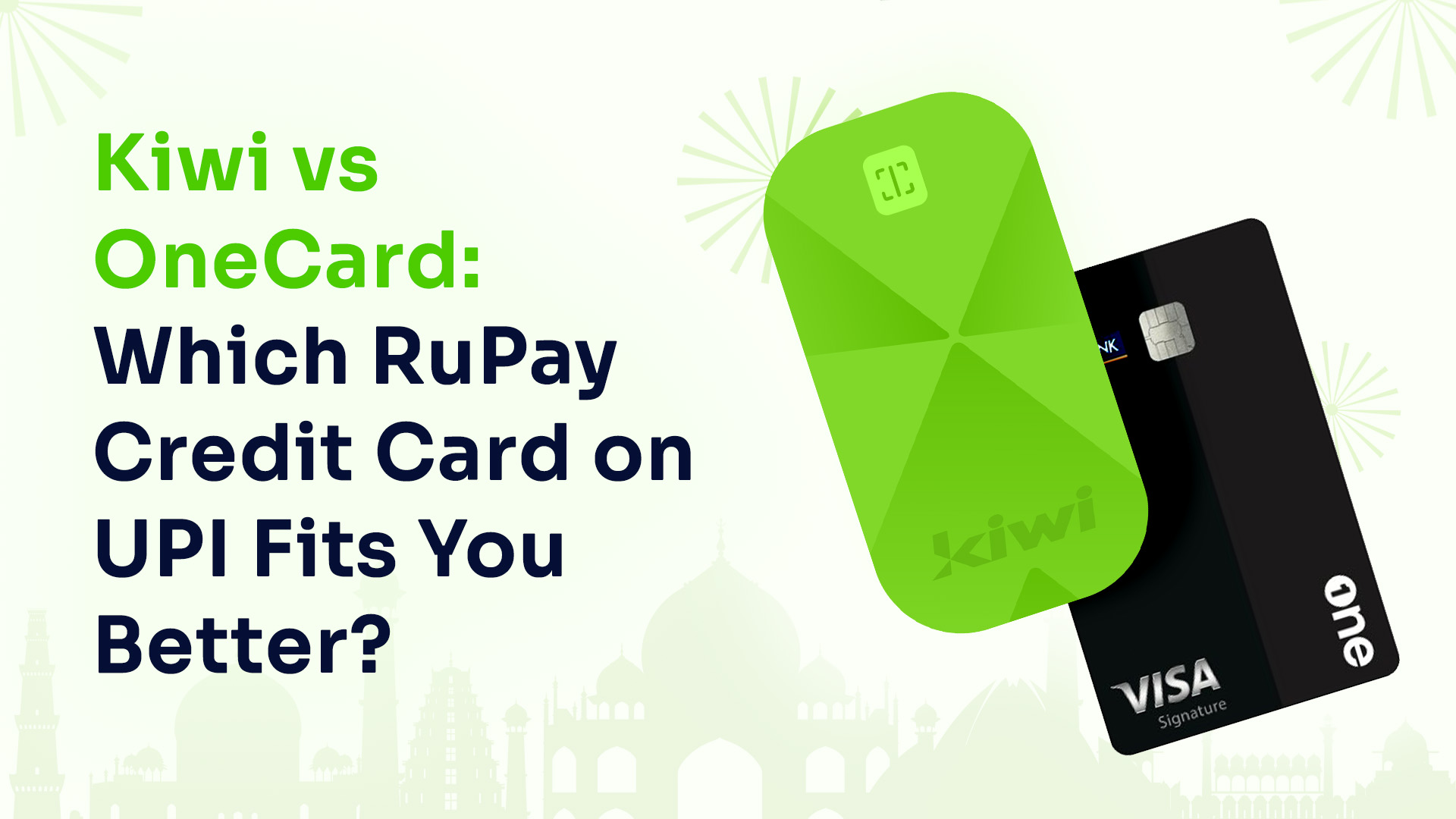
If scanning a UPI QR with your phone and paying via credit is part of your daily routine, you’ve likely looked into RuPay-on-UPI cards. Kiwi and OneCard both offer this—but their styles couldn’t be more different. Let’s break it down so you can see which one is right for your lifestyle.
1. UPI Credit Card Integration
Kiwi:
- Offers a RuPay Credit Card you link to UPI in the Kiwi app.
- Let’s you pay with UPI using RuPay credit card at any merchant QR that accepts it.
- Seamless and made for this exact purpose.
OneCard (RuPay variant):
- The UPI integration is still being rolled out. Some users report that UPI linking and credit routing via their OneCard app is not yet live or remains buggy.
- The emphasis is still on its Visa version and app-based experience.
Verdict: Kiwi is ready for daily UPI credit payments. OneCard’s RuPay UPI is still catching up.
2. Rewards & Cashback
Kiwi:
- Delivers 1.5% flat cashback that can be withdrawn into bank accounts on most offline UPI spends.
- Upgrade to Neon (₹999/yr) for tiered: 3% at ₹50K, 4% at ₹1L, 5% at ₹1.5L—straight into your bank.
OneCard (RuPay variant):
- Not clearly detailed yet. The primary Visa variant rewards via points on spends, and the RuPay roadmap is still emerging.
- No confirmed UPI-specific cashback system (e.g., flat or tiered) is available publicly.
Verdict: Kiwi delivers transparency and certainty, whereas OneCard’s UPI cashback is still uncertain.
3. Ease of Use & App Experience
Kiwi:
- Mobile-first, minimalist app focused primarily on scanning QRs and tracking cashback.
- Aimed at seamless day-to-day use with clean statements.
OneCard:
- Sleek, feature-rich app with smart insights, control over spend categories, and budgeting tools.
- Designed as a “digital wallet” for millennials and Gen Z, not just a UPI credit vehicle.
Verdict: Kiwi is lean and scan-centric. OneCard is broader but less tuned for UPI-first users.
4. Fees & Access
Kiwi:
- Lifetime-free card; no annual or joining fees.
- Neon (optional) adds cashback tiers and lounge perks at ₹999/year.
OneCard (RuPay variant):
- Typically offered with no annual fee at launch.
- Encore benefits may come through their Visa version, not necessarily the RuPay card.
Verdict: While both have no-fee entry points, Kiwi lays out everything transparently. OneCard’s benefit structure remains more Visa-centric.
5. Lounge & Travel Perks
Kiwi:
- Neon members get three domestic lounge visits per year.
OneCard:
- The Visa version offers lounge access via lounge codes and partnerships.
- RuPay variant specifics for domestic lounge access still unclear.
Verdict: Kiwi offers known lounge benefits for RuPay users. OneCard’s travel perks apply mostly to its Visa card, not yet the RuPay.
6. Real Use Feedback (from Reddit & Forum Users)
“I’ve been using Kiwi at kirana counters for months. UPI QR, credit ticked, done. OneCard still isn’t live on UPI for me.”
“Quite a few users said they tried linking the RuPay OneCard to UPI, but the option didn’t appear—or failed.”
Insight: Kiwi is widely praised for being functional and frictionless. OneCard’s rollout is still a promise for many users.
Quick Comparison Table
| Feature | Kiwi (RuPay on UPI) | OneCard (RuPay on UPI) |
| UPI Credit Integration | Live, seamless | Limited or incomplete rollout |
| Cashback Structure | 1.5% flat; up to 5% with Neon | Not clearly defined yet |
| Ease of Redemption | Real ₹ to bank, instant | TBD — current focus on Visa points |
| Fees | Free basic; Neon ₹999/year | Free basic; RuPay benefits unclear |
| Lounge Access | 3 passes/year with Neon | Visa version has lounge; RuPay unclear |
| App Focus | QR-first simplicity | Banking and spending insights |
FAQs: Kiwi vs OneCard (RuPay)
Q1. Can I use both Kiwi and OneCard for UPI QR purchases today?
- Kiwi: Yes—UPI credit works immediately for RuPay users.
- OneCard: Mostly not yet; Many users are still waiting for full UPI linkage activation.
Q2. Which one has better cashback on UPI spending?
- Kiwi: Clear structure—1.5% flat; up to 5% for Neon.
- OneCard: No confirmed UPI-specific cashback yet.
Q3. Do I need to pay any fees?
- Kiwi: No annual fee; Neon plan is ₹999/year.
- OneCard: RuPay variant is free but lacks defined perks so far.
Q4. Can I use the card abroad?
- Both are RuPay-based, so international acceptance depends on partner networks. Neither excels globally out of the box compared to Visa/Mastercard.
Q5. Who is best for everyday UPI payments?
- If you live on UPI (QRs, kirana, cafés) and want clarity and rewards—Kiwi leads.
- If you want a full digital banking experience (insights, budgets) and don’t mind waiting for RuPay traction—OneCard may offer more in the future.
Final Word
If you’re scanning QR codes, paying in small increments at local stores, and just want clean rewards—Kiwi does it right today. If you crave insights, spending tools, and a broader digital banking platform—but don’t mind being early with RuPay UPI—OneCard is promising but not quite there yet.