India’s Small Businesses—chai stalls, kiranas, salons, chemists—have gone from “cash only” to “scan and done.” The quiet engine behind that leap isn’t just UPI. It’s UPI + credit, especially when a RuPay Credit Card is linked to UPI. Together, they’re making payments simpler, cheaper, and more useful for the corner store as well as the customer.
Scan, approve, done: acceptance without hardware
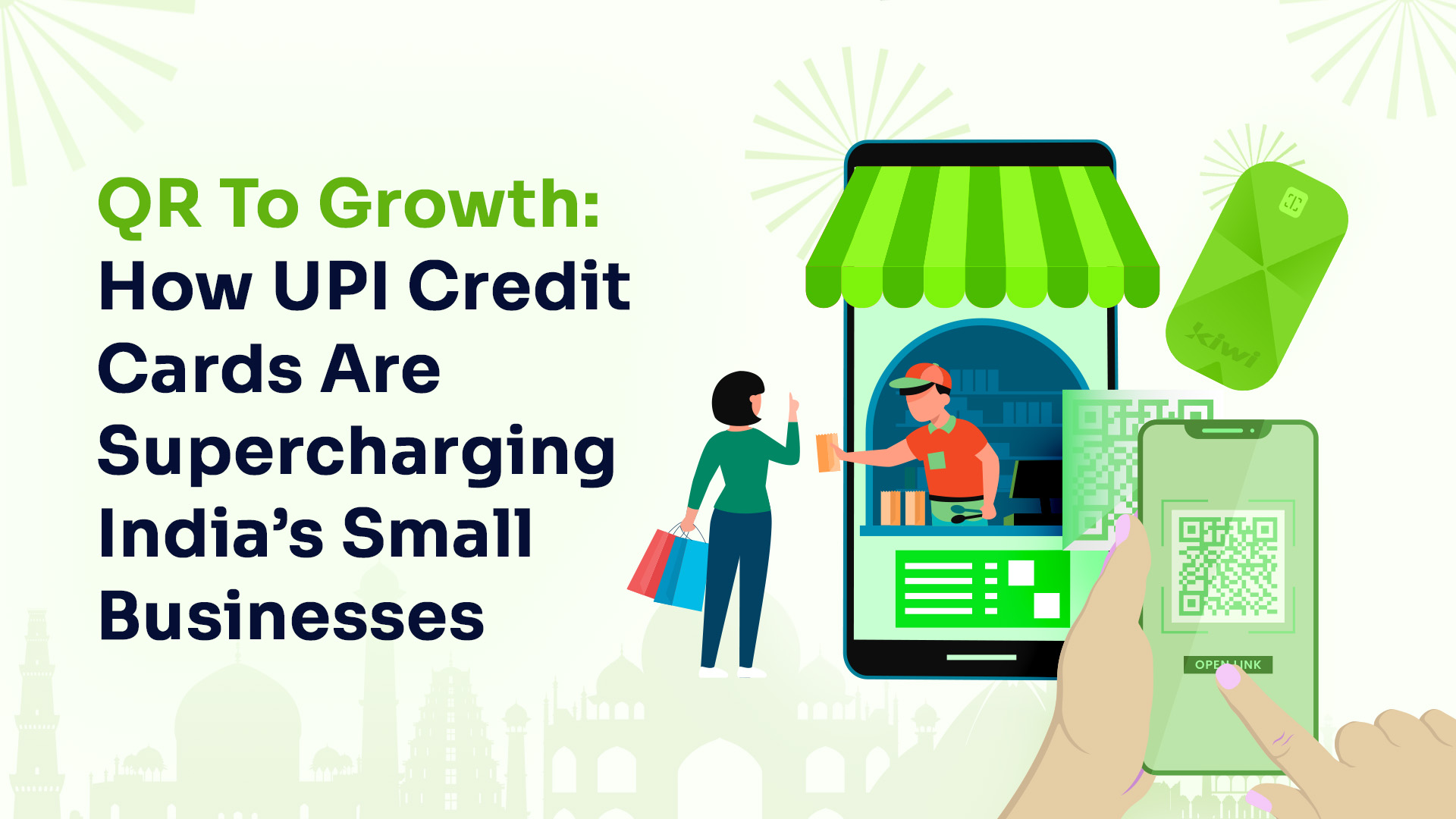
With a RuPay Credit Card linked to UPI, a customer pays the way they already do—by scanning the shop’s QR. The merchant doesn’t need a card terminal, a paper roll, or a new workflow. Settlement shows up with the same ease they expect from UPI. That low-friction acceptance is exactly what “long-tail” merchants needed to go digital.
Why costs matter—and how policy helps
For small-ticket transactions, policy has kept merchant costs low. NPCI’s framework introduced MDR (merchant discount rate) only in specific cases (for example, for certain RuPay credit card on UPI transactions. Transactions up to ₹2,000 have been explicitly protected from merchant charges. That keeps everyday credit-on-UPI viable at the kirana counter.
Debate continues around MDR levels for larger merchants and categories, and some may disable credit acceptance on their QR if economics don’t fit—so acceptance can vary shop to shop. But the direction of travel is clear: keep digital affordable at the smallest ticket sizes so adoption sticks.
Cash-flow wins for tiny businesses
When customers pay via UPI-linked credit, merchants still receive funds quickly, but customers get a billing cycle. That combination boosts sales without forcing the shop to wait for cash. On the business side, UPI-enabled corporate cards (offered by several issuers) add interest-free periods and real-time dashboards, so owners can tag expenses and reconcile in minutes instead of evenings.
Safer by default
Two-factor authentication, tokenization, and real-time alerts make card-on-UPI transactions feel safe for both sides. The customer never shares full card details, and the merchant never handles a plastic card—reducing disputes and the risk of skimming.
Inclusion at the edge of the map
Linking credit to the country’s most familiar payment habit (UPI) means shopkeepers in Tier II/III towns can sell to credit-seeking customers without installing anything new. That’s financial inclusion with the shopkeeper in mind: they keep their QR, their phone, and their rhythm—while tapping into higher-value, credit-backed purchases.
A quick field guide for merchants
- Keep the QR visible. If you accept UPI today, you can accept credit-on-UPI where enabled.
- Know your fees. Transactions ≤ ₹2,000 on RuPay credit via UPI have special protections; above that, MDR may apply based on policy and provider.
- Expect a mix. Some customers’ apps will show “pay by credit,” others only bank account—acceptance settings can vary by merchant category and provider.
- Use your portal. Reconcile daily; digital trails cut bookkeeping time and help with GST reporting.
The bottom line
UPI credit cards didn’t reinvent the shop counter; they met it where it already was. A familiar QR, a faster checkout, lower costs on small transactions, safer rails, and cleaner books—that’s why tiny stores are embracing digital credit. It’s not just a payments upgrade; it’s a business upgrade, one scan at a time.