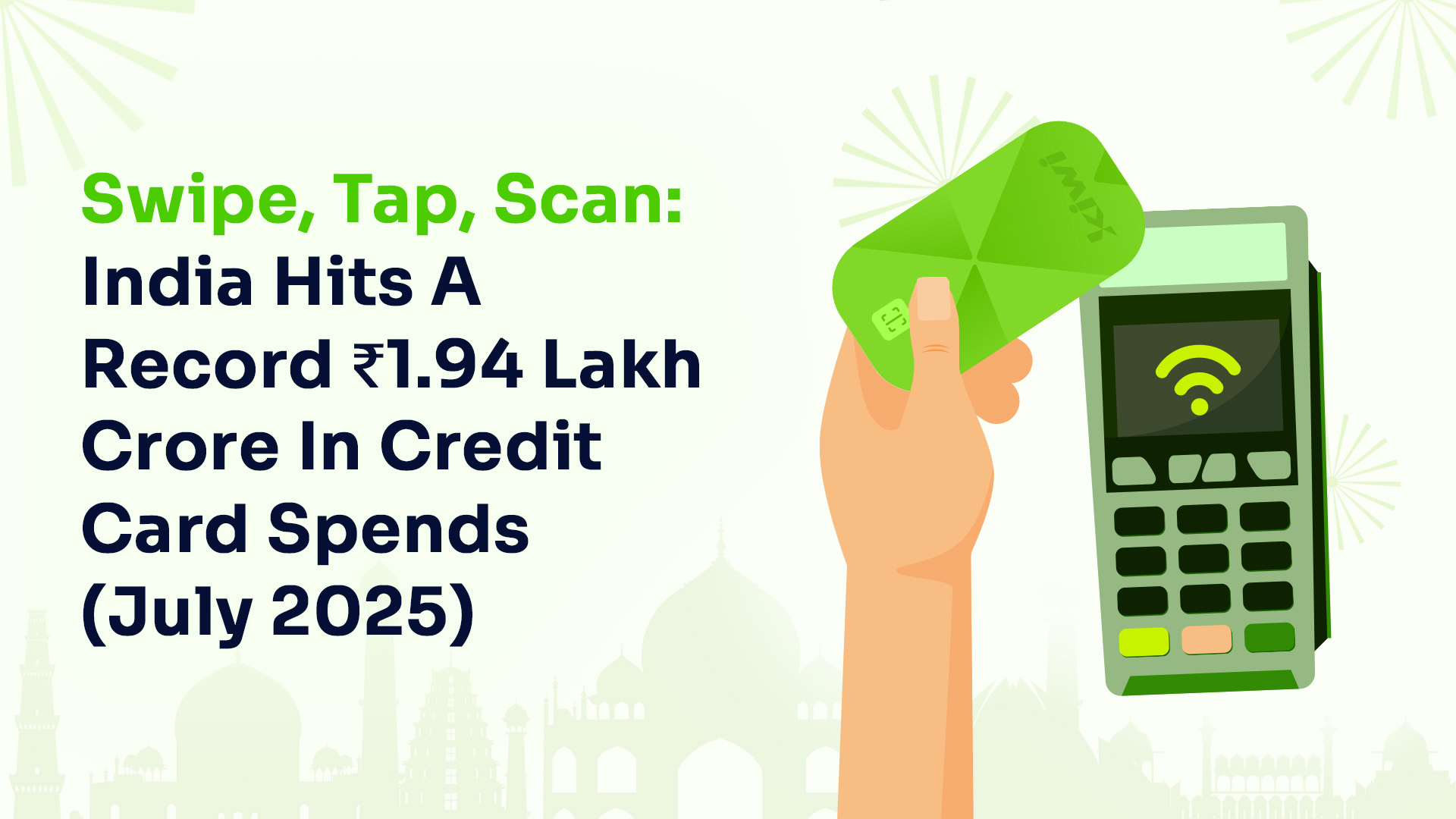
India just set a new monthly record for credit card spending. In July 2025, Indians spent ₹1.94 lakh crore on their cards—up from ₹1.83 lakh crore in June. That’s a 6% month-on-month jump and a 12% rise year-on-year. It’s the highest monthly spend Indian credit cards have ever recorded.
What changed?
- POS (in-store) spends rose to ₹70,380 crore, up 4.3% from June.
- Online and digital payments climbed to ₹1,23,469 crore, up 6.7%.
- 4.26 lakh new cards were added, taking India to 11.16 crore active credit cards.
- HDFC Bank, SBI Cards, ICICI Bank, and Axis Bank drove much of the new issuance.
- International spends dipped >9%, suggesting a domestic spending focus.
Together, the story is simple: more cards in more pockets, used more often—especially online.
Why the surge now?
1) Digital-first behavior is the norm
Contactless taps, saved cards, tokenized checkouts, and one-click payments have turned credit cards into the default online tender. Add in recurring subscriptions and travel/reservations, and the “always-on” card is here.
2) UPI + cards = everyday convenience
UPI keeps pulling cash and debit usage down. At the same time, RuPay Credit Card on UPI lets many users scan standard UPI QRs and pay on credit at local stores where POS terminals never existed. This “scan-and-pay on credit” behavior boosts day-to-day card usage without changing the familiar UPI flow.
3) Acceptance exploded at the long tail
UPI QRs and micro-ATMs spread fast across kiranas, cafés, pharmacies, salons, and service counters. With QR rails everywhere, consumers increasingly reach for credit (rewards + billing cycle) over cash.
4) Supply kept pace
Banks are issuing more cards again. New-to-credit and upgrade cycles both contributed, while lenders appear more comfortable as incremental delinquencies plateau and credit costs stabilize.
POS vs Online: what the mix says
- Stores are back, but online still leads. A ₹70k-crore POS print is robust, yet digital at ₹1.23 lakh crore shows the structural shift to e-commerce, travel portals, food apps, and billers.
- Expect festival-season offers, instant discounts, and EMI-on-checkout flows to push both lines higher through Q3–Q4.
What this means for consumers
- Plan your cycle, not just your cart.
Time big purchases right after your statement date to maximize interest-free days, and pay in full by the due date. - Watch utilization.
Try to keep card balances under ~30% of your limit to protect your credit score. - Know where rewards apply.
Many programs exclude utilities, government payments, fuel, tolls, jewelry, and some professional/business services. Don’t spend “for rewards” where none exist. - Use UPI where it adds value.
If your RuPay Credit Card is linked to UPI, you can scan eligible QRs and pay on credit at many local stores. Some merchants disable credit acceptance on their QR—your app will show if credit isn’t available.
What this means for banks and merchants
- Banks: Momentum in unsecured lending is back, but underwriting discipline matters. Product design is shifting to lifestyle usage, subscription commerce, and QR-based credit.
- Merchants: Make checkout frictionless—offer contactless, tokenized cards, and visible UPI QRs. Surface card-linked offers and instant discounts where you can; customers now expect them.
A quick note for Kiwi users
If you use Kiwi, you get a RuPay Credit Card you can link to UPI inside the Kiwi app and use to scan standard UPI QRs and pay via credit at many local merchants. Cashback applies on eligible everyday offline UPI spends per program rules. Some categories (like utilities, government payments/taxes, fuel, tolls, jewelry, and certain professional/business services) are excluded from rewards, and some merchants disable credit on their QR. Plan your monthly cycle, keep utilization reasonable, and your statement will tell a clearer spending story.
The bottom line
July’s ₹1.94 lakh crore milestone is more than a headline. It marks a durable shift in how India pays: cards are now woven into our daily digital habits—tapping at counters, scanning QRs at kiranas, and checking out online. With more cards in circulation, more places to use them, and smarter ways to manage cycles, India’s credit economy isn’t just bigger—it’s getting better at meeting everyday life where it happens.